Introduction
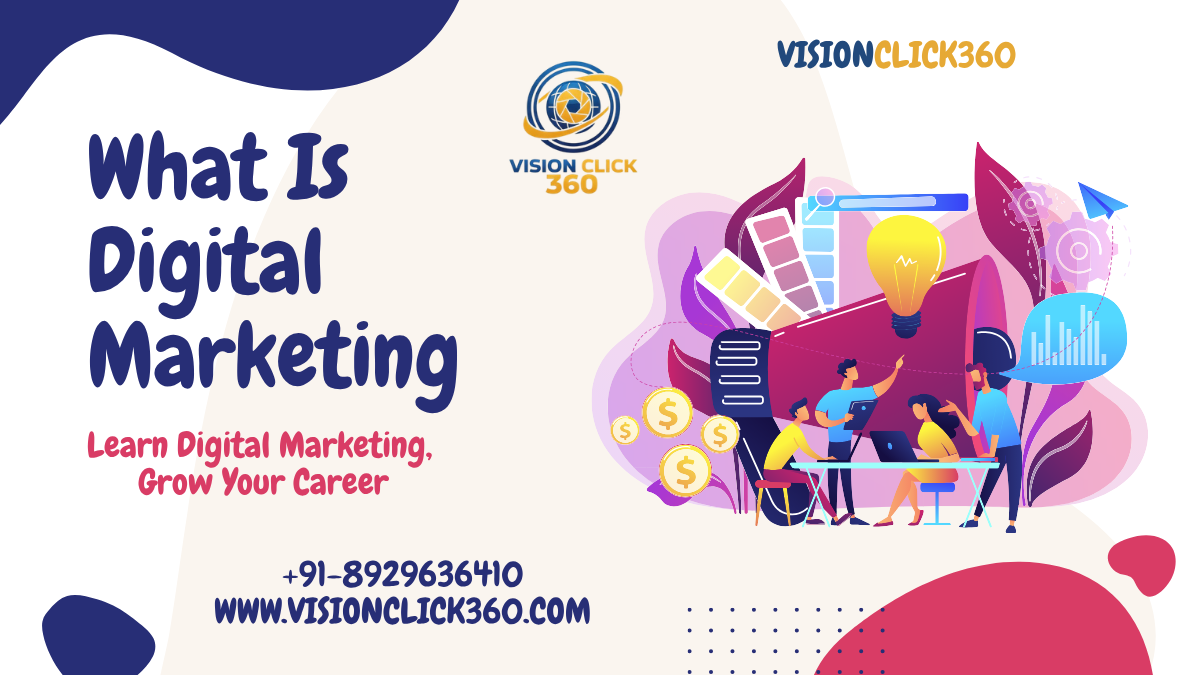
Every business, startup, and professional today faces a unified challenge: standing out in an incredibly crowded online environment. The core answer to this challenge lies in mastering online visibility. But what is digital marketing? At its most fundamental level, digital marketing is the strategic promotion of products, services, or brands using digital channels and the internet to connect with a highly targeted audience.
Whether you are a student in Ghaziabad looking for a viable career path, a business owner in Greater Noida West trying to acquire new leads, or a working professional eyeing a career pivot in the Delhi NCR region, understanding how digital platforms drive commerce is no longer optional. It is the defining factor between business growth and irrelevance. This comprehensive guide breaks down the core mechanisms, strategic frameworks, and career roadmaps you need to navigate this industry successfully.
What is Digital Marketing? A Core Definition
To truly understand what is digital marketing?, you must look beyond individual tools like social media or search engines. Digital marketing is an interconnected ecosystem of online channels used to build brand awareness, generate high-quality leads, and drive customer conversions. Unlike older forms of advertising, it relies heavily on data-driven feedback loops, allowing you to track exactly how a user interacts with your brand.
[User Discovers Content]➔ [Engagement via Value]➔ [Data Tracking & Retargeting]➔ [Conversion]
At the center of every successful digital campaign is user intent. Modern search engines and AI platforms, such as Google AI Overviews, ChatGPT, and Gemini, look for semantic relevance and deeply helpful content rather than forced keywords. Understanding digital marketing means knowing how to map your business solutions directly to the specific problems your target audience is trying to solve online.
Digital Marketing vs Traditional Marketing: The Core Distinctions
To build a highly effective marketing budget, you need to understand how digital channels differ from traditional methods like print, television, radio, and billboards.
| Feature / Metric | Digital Marketing | Traditional Marketing |
| Audience Targeting | High precision (demographics, intent, behavior) | Broad, demographic-based guessing |
| Cost & Efficiency | Highly scalable; fits any budget size | High entry costs (TV spots, large billboards) |
| Data Real-time Analysis | Instant metrics via analytics platforms | Delayed data; difficult to measure exact ROI |
| Interactivity | Two-way communication, immediate engagement | One-way communication; static messaging |
| Geographic Reach | Global or hyper-local targeting simultaneously | Confined to specific physical distribution areas |
Real-World Example
Consider a real estate developer launching a new residential project in Noida Extension. A traditional approach involves renting an expensive billboard along the highway. While thousands see it, there is no way to filter out non-buyers or track exactly how many leads it produces.
Conversely, a digital marketing approach targets users in Noida and Greater Noida who have actively searched for “3 BHK apartments for sale” over the last 30 days. By utilizing Meta Ads and Google Ads, the developer captures explicit intent, tracks every single click, and optimizes the budget in real time based on actual performance data.
The Pillars and Types of Digital Marketing
The entire digital ecosystem is built upon several foundational core disciplines. To execute a comprehensive strategy, you must understand the unique mechanics of these primary types of digital marketing.
Search Engine Optimization (SEO) & Semantic Search
SEO is the process of optimizing your website architecture, code, and content to rank higher naturally on search engine results pages (SERPs). Modern SEO focuses heavily on semantic search—understanding the intent behind a query rather than just matching exact phrases.
- Core Pillars: On-page optimization, off-page authority building, and technical SEO (site speed, mobile responsiveness, structured data).
- Expert Tip: Focus on establishing strong E-E-A-T (Experience, Expertise, Authoritativeness, Trustworthiness). Google and AI search engines prioritize content written by credible sources with verifiable industry experience.
Pay-Per-Click (PPC) & Paid Advertising
PPC allows brands to buy highly targeted traffic by paying a set fee each time an ad is clicked. Google Ads (Search and Display) and Meta Ads (Facebook and Instagram) are the dominant platforms here.
- Best Practice: Always run A/B split tests on your ad copy and creative elements. Direct your paid traffic to a dedicated, high-converting landing page rather than a generic home page.
Social Media Marketing (SMM)
SMM leverages channels like LinkedIn, Instagram, Facebook, and YouTube to build community engagement, share updates, and humanize your brand.
- Common Mistake: Treating every social media platform exactly the same. B2B audiences in Delhi NCR expect thought leadership on LinkedIn, while B2C consumers engage more with visual storytelling on Instagram.
Content Marketing & Brand Storytelling
Content marketing focuses on creating and distributing valuable, consistent, and relevant assets—like articles, case studies, and infographics—to attract and retain a clearly defined audience.
- Industry Trend: The rise of generative AI tools means search engines are flooded with low-quality, automated text. The brands that win today are those producing original case studies, unique data points, and experience-led guides.
Email Marketing & Automation
Despite being one of the oldest online channels, email marketing continues to deliver some of the highest return on investment (ROI) figures across the industry. It involves nurturing leads through targeted, personalized email sequences.
- Best Practice: Segment your email lists carefully based on user behavior, purchase history, and demographics to ensure your messages remain highly relevant.
Top Benefits of Digital Marketing for Modern Brands
Adopting a comprehensive digital framework provides businesses with clear competitive advantages:
- Hyper-Targeted Precision: You can serve your advertisements strictly to individuals who match your ideal customer profile, reducing wasted ad spend.
- Measurable ROI: Tools like Google Analytics provide complete transparency, showing you exactly where a customer came from and what actions they took on your site.
- Level Playing Field: A small business or startup based in Greater Noida can compete directly with large corporations by executing a smarter, highly targeted semantic SEO strategy.
- Real-Time Optimization: If an ad campaign underperforms, you can immediately adjust the targeting, change the budget, or rewrite the copy to improve performance.
Scope of Digital Marketing in India: Trends and Data
The scope of digital marketing in India is expanding rapidly. As affordable internet access spreads across both major metropolitan areas and tier-2 or tier-3 cities, millions of new consumers are coming online daily. Businesses of all sizes are quickly shifting their marketing budgets away from traditional print mediums toward digital channels.
[Increased Internet Access]➔ [Surge in Online Consumers]➔ [Corporate Shift to Digital Budgets]➔ [High Demand for Skilled Talent]
This rapid transition has created a significant talent gap across the country. Companies in major business hubs—including Noida, Ghaziabad, and the wider Delhi NCR area—are constantly searching for qualified specialists who can manage organic search campaigns, run profitable paid media accounts, and design high-converting web experiences. Whether you want to work within an agency, build a freelance business, or scale your own startup, mastering these skills offers long-term career stability.
Your Step-by-Step Digital Marketing Career Roadmap
Breaking into the industry requires a structured approach to building practical, hands-on skills.
Step 1: Master the Fundamentals (SEO, PPC, SMM) │ ▼Step 2: Build a Live Portfolio (Run campaigns, manage a test website) │ ▼Step 3: Optimize Your Professional Resume & Portfolio │ ▼Step 4: Practice Core Industry Interview Questions │ ▼Step 5: Apply for Structured Roles or Secure Freelance ClientsBuilding a Winning Digital Marketing Resume
When crafting your resume, move away from vague lists of duties and focus on showcasing measurable results. Use these resume tips to stand out to hiring managers:
- Highlight Metric-Driven Results: Replace generic text like “Responsible for managing social media” with actionable data: “Increased organic Instagram engagement by 42% over six months, generating 150+ inbound leads.”
- Showcase Technical Tools: Explicitly list your experience with standard industry tools like Google Analytics, SEMrush, Google Ads Manager, and WordPress.
- Include Live Project Portfolios: Provide links to live websites you have optimized, real ad campaigns you have managed, or content pieces that rank on the first page of search results.
Cracking the Interview: Core Interview Questions
Be prepared to answer technical, strategic, and problem-solving interview questions during your hiring process:
- Question 1: How do you approach a drop in organic search traffic for a client’s website?
- Answer Framework: Explain that you would first check Google Search Console to see if the drop is site-wide or isolated to specific pages. Next, check for recent algorithm updates, look for technical errors like broken redirects or broken crawl paths, and analyze competitor movements to see if someone else is outranking your content.
- Question 2: What is the core difference between SEO and PPC, and how do you balance them?
- Answer Framework: SEO focuses on long-term organic growth, credibility, and authority, which takes time to build. PPC delivers immediate visibility and targeted traffic for specific promotions or conversions. A balanced strategy uses PPC for instant lead generation while building out sustainable organic SEO assets over time.
- Question 3: How do you measure the success of a top-of-funnel content marketing campaign?
- Answer Framework: Instead of looking purely at direct conversions, analyze engagement metrics like time on page, scroll depth, social shares, internal click-through rates, and assisted conversions within Google Analytics.
Essential Tools of the Trade
To execute your strategies efficiently, you need to familiarize yourself with the standard tools used by industry professionals:
- SEO & Analytics: Google Search Console, Google Analytics 4 (GA4), Ahrefs, SEMrush.
- Paid Advertising: Google Ads Editor, Meta Business Suite.
- Content & Design: WordPress, Canva, Adobe Creative Cloud.
- Automation: HubSpot, Zapier, Mailchimp.
Real-World Case Study: Transforming a Local Business in Delhi NCR
- The Client: A newly established boutique fitness studio located in Greater Noida West.
- The Challenge: High local competition, low brand awareness, and zero organic visibility on search engines.
- The Strategy:
- Local SEO Optimization: Set up and optimized a Google Business Profile, targeting hyper-local keywords like “best gym in Noida Extension” and gathering authentic client reviews.
- Content Blueprint: Published deep, helpful articles addressing local health concerns, fitness advice, and nutrition tips tailored to working professionals in the region.
- Hyper-Local Paid Campaigns: Ran targeted Meta lead generation ads within a strict 5-kilometer radius of the studio, offering a free three-day guest pass.
- The Results: Within 90 days, organic local search visibility grew by 150%, and the paid ad campaigns brought in a steady stream of qualified local leads, allowing the studio to reach full membership capacity ahead of schedule.
The Definitive Digital Marketing Implementation Checklist
Use this structured checklist to ensure your digital marketing initiatives are set up correctly from day one:
- [ ] Technical Foundation: Install Google Analytics 4 (GA4) and verify your site with Google Search Console.
- [ ] Mobile & Speed Optimization: Confirm your website loads in under 2.5 seconds and functions cleanly across all mobile devices.
- [ ] Intent-Based Keyword Research: Identify highly relevant semantic search queries, long-tail variations, and clear user questions.
- [ ] On-Page Optimization: Craft descriptive H1 headers, integrate natural keyword variations, and add structured schema markup.
- [ ] Content Distribution Plan: Establish a consistent schedule for publishing and sharing original, high-value content across social media channels.
- [ ] Lead Capture Conversion Setup: Design clear, prominent call-to-action (CTA) elements and simple contact forms on every landing page.
Frequently Asked Questions (FAQs)
Q1: Can I learn digital marketing on my own, or do I need structured professional training?
While there are plenty of free tutorials available online, learning on your own often lacks structured direction and hands-on project experience. Enrolling in a professional training institute provides structured learning paths, access to real-world case studies, mentorship from industry experts, and direct job placement support. This structured approach helps you build practical experience quickly and avoids the common trial-and-error phase that comes with self-study.
Q2: What is the average starting salary for a digital marketing professional in India?
The starting salary for an entry-level professional in India typically ranges from ₹2.5 Lakhs to ₹4.5 Lakhs per annum, depending on your practical skill level, certifications, and location. In major commercial hubs like Noida, Gurgaon, and Delhi NCR, starting packages are often higher due to the high concentration of digital agencies and corporate offices. As you gain hands-on experience and master specialized skills like performance marketing or advanced SEO, your compensation can scale up quickly.
Q3: How long does it take to see tangible results from an organic SEO campaign?
Organic SEO is a long-term investment rather than an overnight fix. Generally, it takes anywhere from 3 to 6 months to see measurable improvements in keyword rankings, organic traffic, and lead generation. This timeline depends on factors like your website’s history, competitive landscape, technical foundation, and the consistency of your high-quality content output. Consistent optimization creates compounding value that drives sustainable growth over time.
Q4: Is digital marketing a safe and sustainable career path given the rise of Generative AI?
Yes, digital marketing remains a highly resilient and growing career path. While generative AI tools can automate basic content production and repetitive tasks, they cannot replace human strategic thinking, emotional intelligence, data interpretation, and creative brand positioning. The industry is shifting toward professionals who know how to effectively use AI tools to scale production, build deep semantic content strategies, and optimize user experiences for modern search platforms.
Q5: How much ad budget does a small business need to start with paid digital campaigns?
One of the main benefits of paid digital channels is their flexibility. You can start small, with budgets as low as ₹500 to ₹1,000 per day on platforms like Google Ads or Meta Ads. The best approach is to start with a modest budget, test your ad creatives and target audiences, analyze your early conversion data, and gradually scale up your investment once you see clear profitability and a positive return on investment.
Conclusion & Strong Call-to-Action
Mastering the core elements of digital marketing is the most effective way to accelerate your career growth or scale a modern business. From understanding user intent to managing high-performing paid campaigns, these skills drive tangible growth in today’s digital economy.
If you are ready to transition from foundational theory to practical execution, partner with VisionClick 360, the premier Digital Marketing Training Institute in Greater Noida West. We provide comprehensive, hands-on training programs designed to turn students, entrepreneurs, and working professionals into elite digital marketing experts.
Whether you want to launch a successful career or scale your business operations across the Delhi NCR region, we offer the precise services and training programs you need to succeed:
- Digital Marketing Course (Comprehensive, industry-mapped training with full placement support)
- SEO Services (Advance your search rankings using modern, semantic search strategies)
- Google Ads & Meta Ads (Build, manage, and scale highly profitable paid media campaigns)
- Website Development (Build fast, responsive, and high-converting web experiences)
- Social Media Marketing (Grow active communities and enhance your organic brand reach)
Take the next step in your professional growth. Contact VisionClick 360 today to schedule a free career counseling session or explore our strategic growth services.
- Website: https://visionclick360.com/
- Location: Greater Noida West, Noida Extension, Delhi NCR