Quick Overview
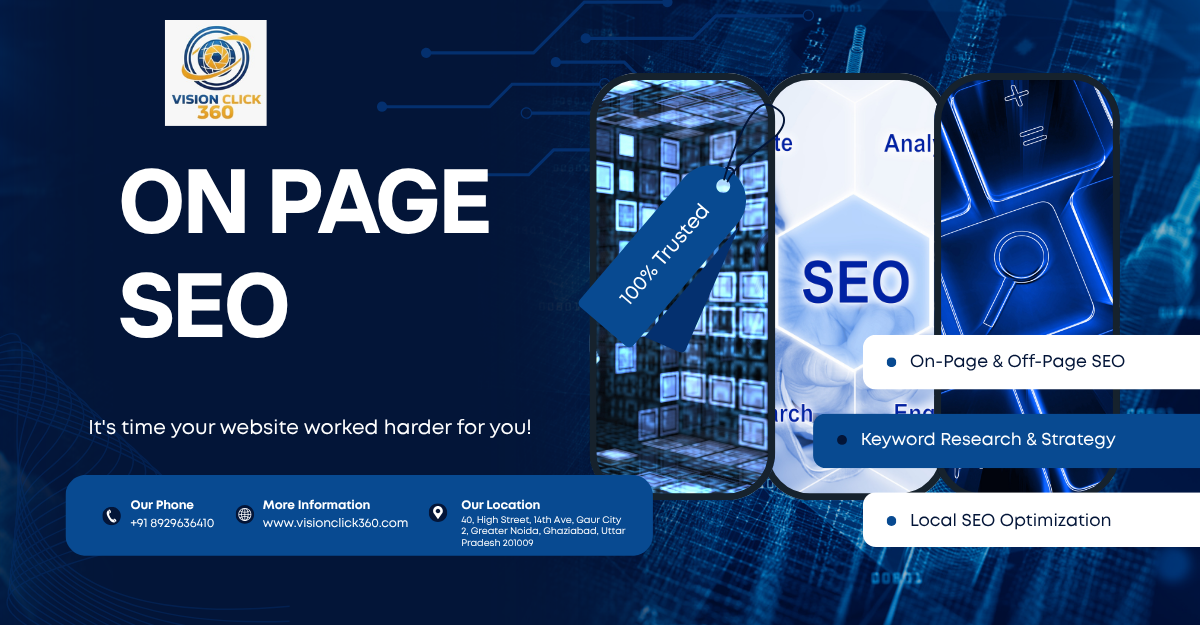
On Page SEO is more than adding keywords to website content. It is a strategic process of improving page structure, content quality, search relevance, internal links, images and user experience. When implemented correctly, it helps search engines understand your website while making information easier for potential customers to find. This guide covers 15 practical optimization techniques, professional SEO services, costs, a real-world case study and actionable recommendations for business growth.
Introduction: Why Is Your Website Not Getting the Attention It Deserves?
🚀 You have invested in website development, published blogs, added service pages and perhaps even spent money on advertising. But when potential customers search Google for services like yours, your website is nowhere to be found.
What is missing?
In many cases, the problem is not the business itself. It is the way its website communicates information to search engines and visitors.
This is where On Page SEO becomes important.
Think about visiting a store where products are poorly arranged, price labels are missing and nobody can explain what the shop sells. Even if the products are excellent, customers may leave without making a purchase.
A website can face the same problem.
On Page SEO helps organize your digital storefront so visitors can understand your services, explore useful information and take action.
At VisionClick 360, we believe a successful website should do more than look attractive. It should support visibility, customer engagement and business objectives.
Visit https://visionclick360.com/ to explore our digital marketing solutions.
If you are planning to improve your online presence, our guide to Web Development Company in Noida: Build Business also explains why a well-developed website is an important starting point for digital growth.
Here is what effective website optimization can help you achieve:
- 🔍 Better search relevance through properly organized website information.
- 🎯 More relevant visitors by targeting the right search queries.
- 📱 Improved browsing experiences across smartphones and desktops.
- 📈 Better conversion opportunities through useful content and clear actions.
- 💡 Stronger website foundations for long-term organic growth.
Let’s understand how to turn an ordinary website into a more useful and search-friendly business asset.
1. Understanding On Page SEO: What Actually Happens Behind the Scenes?
On Page SEO refers to improving the content and elements of individual website pages to make them more relevant, accessible and understandable.
It involves optimizing everything from written content and headings to images, URLs and internal navigation.
For example, imagine a company offering website design services in Greater Noida.
Its website should clearly communicate:
- What website development services are available?
- Which businesses can benefit?
- What problems can the services solve?
- How can interested customers contact the company?
When this information is presented clearly, both visitors and search engines can better understand the purpose of the page.
The Main Elements of Website Optimization
| Element | Optimization Objective |
|---|---|
| SEO Title | Describe the webpage accurately |
| Meta Description | Summarize the page for search users |
| H1 and H2 Headings | Organize information logically |
| Keywords | Match relevant search queries |
| Website Content | Answer visitors’ questions |
| Images | Improve accessibility and understanding |
| Internal Links | Connect related information |
| URLs | Create descriptive page addresses |
| Mobile Experience | Improve smartphone usability |
| Page Performance | Support smooth browsing |
The important thing to remember is that On Page SEO is not a trick for manipulating search engines. It is a way to make your website more useful.
2. 15 Powerful On Page SEO Techniques for Better Website Performance
A website does not become successful through one optimization activity. Several improvements work together to create a stronger search experience.
Here are 15 practical techniques businesses should consider.
1. Understand Search Intent Before Choosing Keywords
Before writing a single paragraph, understand why someone is searching for your topic.
For example:
- “What is On Page SEO?” indicates an informational requirement.
- “Best on page seo service” indicates commercial investigation.
- “Hire an SEO agency” suggests a stronger intention to purchase.
These searches may contain similar terms, but their purposes are different.
Create content that matches the searcher’s expectations instead of trying to rank every page for the same keyword.
2. Select Keywords That Match Your Business
Keyword research helps you understand the language potential customers use when searching online.
A digital marketing company may consider keywords such as:
- On Page SEO.
- On page seo techniques.
- Website optimization services.
- Professional SEO services.
- SEO agency in Greater Noida.
- Local SEO services.
Use keyword research tools to understand search demand, competition and related queries.
However, do not select keywords only because they have attractive search volumes.
A keyword should be relevant to the actual content and the audience you want to reach.
3. Create Click-Worthy SEO Titles
Your SEO title introduces your webpage to people browsing search results.
A useful title should explain the topic without making exaggerated promises.
Consider these examples:
Weak: SEO Guide
Better: On Page SEO: 15 Smart Ways to Improve Google Rankings
The improved title gives visitors a clear reason to explore the page.
Best practices:
- Include your primary keyword naturally.
- Make each title unique.
- Communicate the page’s actual purpose.
- Avoid unnecessary repetition.
- Keep the wording concise.
Google may generate its own title link using different page elements, so accurate and consistent page headings are important too.
4. Write Descriptive Meta Descriptions
A meta description provides a short summary of the webpage.
Although Google does not always use the exact description you provide, a relevant summary can help explain the value of your content.
Example:
“Discover practical on page SEO strategies to improve website visibility, attract relevant visitors and create better opportunities for business growth.”
A good meta description should:
- Describe the actual page.
- Include relevant keywords naturally.
- Highlight the reader’s benefit.
- Avoid misleading promises.
- Use clear and simple language.
Write for people rather than trying to fit as many keywords as possible.
5. Organize Content with Proper Heading Tags
A well-organized webpage is easier to read and navigate.
Use headings to divide information into meaningful sections.
Recommended structure:
- H1: Main topic of the webpage.
- H2: Major content sections.
- H3: Supporting topics.
- H4: Additional details when necessary.
For example:
H1: Complete Guide to On Page SEO
H2: Important Optimization Techniques
H3: Keyword Research
H3: Content Optimization
H3: Internal Linking
H2: Benefits of Professional SEO Services
Avoid creating headings simply to repeat keywords. Every heading should introduce useful information.
6. Publish Content That Solves Real Problems
Imagine a customer visiting your website because they want to improve their Google visibility.
They do not want five paragraphs repeating the definition of SEO.
They want practical information.
Your content should explain what needs improvement, why it matters and how the reader can approach the problem.
Use:
- Realistic business examples.
- Simple explanations.
- Relevant statistics.
- Expert observations.
- Original recommendations.
- Helpful comparisons.
Avoid copying competitor articles or publishing unnecessary content just to increase website word count.
Google’s SEO Starter Guide recommends creating useful, unique and easy-to-understand content.
7. Create Clean and Descriptive URLs
Your webpage address should provide a reasonable idea of what visitors will find.
For example:
Poor URL:
example.com/page.php?id=4587
Improved URL:
example.com/on-page-seo-guide/
A descriptive URL is easier to understand and share.
Use relevant words, hyphens and a logical website structure.
If an existing URL must change, use an appropriate redirect and update internal links to avoid unnecessary broken pages.
8. Optimize Images for Accessibility and Performance
Images improve the visual experience, but they should not slow down your website unnecessarily.
Follow these practices:
- Compress large image files.
- Choose suitable image formats.
- Use descriptive filenames.
- Specify appropriate image dimensions.
- Write meaningful ALT descriptions.
- Avoid unnecessary decorative images.
For example:
Filename: website-seo-content-optimization.jpg
ALT text: “SEO specialist reviewing website content optimization.”
ALT text should explain the image to people who cannot see it. It should not become an opportunity for keyword stuffing.
9. Strengthen Internal Linking
Internal links connect relevant pages within your website.
Suppose your business publishes an article about website optimization.
You can naturally connect it to a related web development service page or a relevant digital marketing guide.
A good internal linking strategy helps visitors discover more useful information and gives search engines additional paths to find your pages.
Use descriptive anchor text.
For example, someone interested in learning practical marketing skills can explore Digital Marketing Courses in Noida Extension.
Do not insert links randomly. Each link should provide additional value to the reader.
10. Improve Website Loading Performance
Visitors expect websites to load smoothly.
A slow website can interrupt browsing and make it harder for people to explore your services.
Google’s Core Web Vitals provide three important performance measurements:
| Metric | What It Measures | Recommended Good Result |
|---|---|---|
| LCP | Loading performance | 2.5 seconds or less |
| INP | Interaction responsiveness | Below 200 milliseconds |
| CLS | Visual stability | Below 0.1 |
Ways to improve performance include:
- Image compression.
- Browser caching.
- Reliable hosting.
- Reducing unnecessary scripts.
- Optimizing CSS and JavaScript.
- Reviewing third-party plugins.
Use Google PageSpeed Insights to identify areas that need improvement.
11. Make Every Important Page Mobile-Friendly
A website may look excellent on a computer but become difficult to use on a smartphone.
That creates a poor experience for visitors.
Check whether:
- Text is comfortable to read.
- Navigation works properly.
- Buttons are easy to access.
- Images fit the screen.
- Contact forms work correctly.
- Important information is visible without unnecessary scrolling.
Test your website on different screen sizes.
Mobile usability should be considered during website development, not added as an afterthought.
12. Use Structured Data Where Relevant
Structured data helps search engines interpret specific information about your webpage.
Depending on the website, suitable schema types may include:
- Organization.
- LocalBusiness.
- Article.
- Product.
- BreadcrumbList.
- Course.
For example, a business website may use appropriate Organization or LocalBusiness structured data to describe its business information.
Make sure the markup matches the information visitors can actually see on the page.
Remember that structured data does not guarantee rich search results.
13. Improve Content Readability
Good information can still fail when it is difficult to read.
Avoid long paragraphs filled with technical language.
Instead:
- Use short paragraphs.
- Explain technical terms.
- Add relevant examples.
- Use bullet points where helpful.
- Keep sentences clear.
- Remove unnecessary repetition.
Imagine explaining your service to someone who has never heard of SEO.
If they understand your explanation, your content is moving in the right direction.
14. Optimize Your Calls to Action
A visitor should not have to search through your entire website to discover how to contact you.
Add relevant calls to action where they make sense.
Examples:
- Request a Website Audit.
- Explore Our SEO Services.
- Contact Our Team.
- Book a Free Demo Class.
- Discuss Your Business Goals.
For service pages, make contact information accessible and ensure that enquiry forms are simple to complete.
The objective is to help interested visitors take their next step.
15. Regularly Review and Update Important Pages
Publishing an article does not mean the optimization work is finished.
Information can become outdated, links can break and business services can change.
Review your important pages periodically.
Check:
- Whether information is still accurate.
- Whether external links work.
- Whether the page matches current search intent.
- Whether new questions should be answered.
- Whether contact details are correct.
- Whether performance has changed.
Use Google Search Console to monitor impressions, clicks, search queries and indexing information.
Update content when there is something meaningful to improve, not merely to change the publication date.
3. On Page SEO Service: What Should You Expect from Professionals?
Managing a website becomes more complicated as the number of pages increases.
A business may have service pages, blogs, product categories, landing pages and location-specific content.
Optimizing everything without a plan can waste time and create inconsistent results.
A professional on page seo service generally focuses on identifying website weaknesses and implementing improvements based on business requirements.
Common Services Included in an SEO Package
| Service | Expected Work |
|---|---|
| Website SEO Audit | Review existing optimization issues |
| Keyword Research | Identify relevant search opportunities |
| Title Optimization | Improve page titles |
| Meta Optimization | Write relevant descriptions |
| Content Review | Improve page usefulness |
| Heading Structure | Organize page sections |
| Image Optimization | Review filenames and ALT text |
| Internal Linking | Connect related pages |
| URL Review | Improve address structure |
| Performance Review | Identify speed-related issues |
| SEO Reporting | Monitor search performance |
How Much Does On Page SEO Cost in India?
SEO pricing varies according to website size, industry, competition, technical requirements and the number of pages involved.
A small business website may need a limited optimization project, while a large ecommerce store may require continuous work.
The following factors influence pricing:
- Number of webpages requiring optimization.
- Amount of existing content.
- Website development requirements.
- Keyword research complexity.
- Technical issues.
- Content writing requirements.
- Reporting and ongoing support.
Instead of choosing the cheapest package, ask the provider what work will actually be completed.
A transparent proposal should explain the deliverables, timelines, reporting process and additional charges.
How to Select the Right SEO Agency?
Before hiring a provider, review:
- Previous project experience.
- Knowledge of your industry.
- Website audit methodology.
- Content quality.
- Reporting transparency.
- Communication process.
- Technical SEO understanding.
- Realistic performance expectations.
Avoid agencies that promise guaranteed rankings or claim that every keyword will reach the first position within a fixed number of days.
SEO requires testing, monitoring and consistent improvements.
4. SEO On Page and Off Page: Why Both Matter
On-page and off-page activities support different parts of an SEO strategy.
Understanding the difference helps businesses allocate their resources more effectively.
| Factor | On Page SEO | Off Page SEO |
|---|---|---|
| Main Area | Your website | External platforms and websites |
| Activities | Content and page optimization | Backlinks and digital PR |
| Control | Mostly direct | Depends on external parties |
| Objective | Improve relevance and usability | Build reputation and recognition |
| Example | Optimizing a service page | Earning an industry publication link |
How Do They Work Together?
Imagine publishing an excellent article about digital marketing services.
Your page has useful information, proper headings and relevant internal links.
These are on-page improvements.
Now imagine another relevant industry website references your article because it provides useful information.
That is an example of an off-page SEO signal.
Both activities can contribute to a broader search visibility strategy.
However, backlinks should be earned through relevant and trustworthy relationships rather than artificial link schemes.
A balanced SEO strategy includes:
- Useful website content.
- Relevant keyword targeting.
- Proper technical foundations.
- Strong internal linking.
- Genuine external recognition.
- Consistent performance monitoring.
5. Real-World SEO Case Study: How an Artisan Bakery Increased Mobile Organic Traffic by 460%
A real-world example can help explain why website optimization should be approached as a complete strategy.
Semrush published a case study featuring Edelweiss Bakery, a local bakery in Fort Lauderdale, Florida, that wanted to improve its online visibility and attract more customers.
Background: The Business Challenge
Edelweiss Bakery had been serving customers for more than 20 years.
Despite its established local presence, the business wanted to improve its organic search performance and generate more online orders.
Its website needed attention across several areas, including:
- Website structure.
- Search visibility.
- Homepage content.
- Keyword targeting.
- Technical SEO.
- Ecommerce presentation.
The challenge was not simply to publish more content. The business needed a coordinated improvement plan.
Strategy: What Was Improved?
The bakery worked with the SEO agency Why SEO Serious.
The campaign involved several important stages.
Step 1: Competitor and Keyword Research
The team identified online competitors and researched relevant keywords that could help the bakery reach potential customers.
Step 2: Website Structure Improvements
The website structure was reviewed, and relevant sections were improved to make important information easier to discover.
Step 3: Homepage Optimization
The homepage was redesigned and its metadata was updated based on keyword research and search intent.
Step 4: Technical SEO
A technical audit helped identify issues affecting the website’s search performance.
Step 5: Content Strategy
The team developed a blog content plan with relevant topics and keyword opportunities.
Step 6: Ecommerce Improvements
Product categories, product cards and ecommerce analytics were also addressed.
Results: What Happened?
The Semrush case study reported the following outcomes:
| Performance Measurement | Reported Result |
|---|---|
| Mobile organic visits before | 171 monthly visits |
| Mobile organic visits after | 785 monthly visits |
| Mobile organic traffic growth | 460% |
| Organic traffic growth after four months | 214% |
| Keywords in Top 10 in May | 4 |
| Keywords in Top 10 in October | 26 |
These figures were reported in the published case study and represent the results of the broader campaign.
Key Lesson for Indian Businesses
The bakery’s progress demonstrates an important principle: successful SEO is rarely about one isolated activity.
Improving metadata without fixing important website issues may not be enough. Similarly, publishing blogs without understanding search intent can produce disappointing results.
Businesses should combine content improvements, keyword research, technical optimization, website structure and performance tracking.
A local business in Noida, Greater Noida or Ghaziabad can apply the same strategic thinking according to its market, audience and website requirements.
Case study source: Semrush – How an SEO Agency Helped an Artisan Bakery Increase Mobile Organic Traffic by 460%.
6. Essential On Page SEO Checklist Before Publishing a Website Page
Before publishing a new blog, service page or landing page, use this practical checklist.
Content and Keyword Checklist
- Primary keyword selected.
- Search intent understood.
- Original content prepared.
- Relevant secondary keywords included.
- Clear introduction written.
- Proper heading hierarchy followed.
- Important customer questions answered.
- Spelling and grammar checked.
Technical Optimization Checklist
- Unique SEO title added.
- Meta description written.
- Descriptive URL selected.
- Images compressed.
- ALT text reviewed.
- Internal links added.
- Mobile layout tested.
- Canonical URL reviewed.
- Indexing accessibility checked.
- Structured data validated where relevant.
User Experience Checklist
- Content is easy to read.
- Navigation works properly.
- Contact information is visible.
- Forms work correctly.
- CTA is relevant.
- Page loads smoothly.
- No unnecessary pop-ups interrupt visitors.
Best Tools for Website Optimization
| Tool | Purpose |
|---|---|
| Google Search Console | Monitor search visibility |
| Google Analytics 4 | Understand website traffic |
| Google PageSpeed Insights | Check performance |
| Google Keyword Planner | Research keywords |
| Google Rich Results Test | Validate supported structured data |
| Semrush | Research competitors and keywords |
| Screaming Frog | Review website crawling and page issues |
Many of these tools provide free features, while some professional platforms offer paid plans.
7. Emerging SEO Trends: What Should Businesses Focus on in 2026?
Search behaviour continues to evolve. Businesses need to focus on creating helpful information rather than following every new SEO trend.
Search Intent Is More Important Than Keyword Repetition
A page should answer the question behind a search.
Someone looking for SEO education needs an informative explanation, while someone looking for professional services needs service details, pricing information and a way to contact the provider.
Build separate pages when the user requirements are genuinely different.
AI Search Requires Clear and Reliable Information
People increasingly use AI-powered search experiences to explore topics and compare solutions.
Businesses should focus on:
- Accurate information.
- Clear explanations.
- Original examples.
- Consistent business details.
- Helpful question-based sections.
- Reliable supporting references.
There is no guaranteed formula for appearing in AI-generated answers.
However, publishing trustworthy and understandable content gives readers and information systems a clearer source to evaluate.
User Experience Should Remain a Priority
A website should not be optimized only for search engines.
Visitors should be able to understand your services, navigate between pages and find contact information without difficulty.
Invest in mobile usability, accessibility, performance and content clarity.
Measure Business Outcomes, Not Just Rankings
Ranking reports are useful, but they do not tell the entire story.
Also monitor:
- Relevant organic traffic.
- Search impressions.
- Click-through rates.
- Contact form submissions.
- Qualified enquiries.
- Phone calls.
- Sales opportunities.
The purpose of SEO should connect with actual business objectives.
8. Frequently Asked Questions About On Page SEO
Q1. What is On Page SEO and how does it work?
On Page SEO is the process of improving individual website pages so search engines can understand their topics and visitors can access useful information easily. It includes content optimization, SEO titles, meta descriptions, headings, keywords, URLs, images and internal links. For example, a digital marketing agency can improve its service page by explaining its SEO offerings, target audience, working process and contact options. These improvements help make the page more relevant and useful, although search rankings depend on several additional factors.
Q2. What are the best on page seo techniques for beginners?
Beginners should start with keyword research, descriptive SEO titles, useful content, proper headings, readable URLs, image ALT text and relevant internal links. Mobile usability and website performance should also be reviewed. Rather than trying to optimize every technical element immediately, focus on the most important pages first. Make sure each page answers a specific audience requirement and provides accurate information. Tools such as Google Search Console and PageSpeed Insights can help identify opportunities for improvement and monitor performance over time.
Q3. How much does a professional on page seo service cost?
The price of a professional on page seo service depends on the website’s size, number of pages, industry competition and optimization requirements. A small business may need a one-time audit and improvements to selected pages, whereas a large ecommerce website may require ongoing optimization. Agencies and freelancers can offer project-based or monthly packages. Before selecting a provider, request a detailed quotation covering keyword research, content optimization, technical support, implementation and reporting. Always compare the actual deliverables rather than choosing a package based only on price.
Q4. What is the difference between SEO on page and off page?
SEO on page focuses on elements within your website, including content, headings, metadata, images and internal links. Off-page SEO involves activities outside your website that can support brand recognition and reputation, such as earning relevant backlinks and digital PR coverage. For example, improving your company’s service page is an on-page activity, while receiving a genuine editorial mention from an industry website is an off-page activity. Both areas can contribute to a broader SEO strategy and should be planned according to your business objectives.
Q5. How long does On Page SEO take to improve rankings?
There is no fixed timeline for On Page SEO results. Search engines need time to discover, crawl and process website changes. Some improvements may become visible relatively quickly, while competitive keywords can take much longer to show meaningful movement. Results depend on the website’s history, content quality, competition, technical condition and overall search strategy. Monitor Google Search Console regularly and compare impressions, clicks and relevant search queries. Avoid expecting guaranteed first-page rankings within a few days of making changes.
Q6. Can On Page SEO increase website enquiries?
Yes, effective page optimization can support more relevant website visits and improve the experience of potential customers. When a service page answers important questions, explains benefits and provides clear contact options, visitors can make better-informed decisions. For example, a website design company can explain its services, project process, target industries and consultation options on a dedicated landing page. However, more traffic does not automatically mean more enquiries. Lead generation also depends on service quality, pricing, trust, competition and the overall customer experience.
Q7. Is keyword density important for website ranking?
Keyword density is not a fixed ranking target that guarantees search visibility. Repeating the same phrase unnecessarily can make content difficult to read and may result in keyword stuffing. Instead, include the primary keyword naturally in relevant locations such as the page title, main heading, introduction and supporting content. Use related terms when they genuinely improve the explanation. Focus on search intent, topic coverage, accuracy and readability rather than trying to achieve an artificial keyword percentage.
Q8. Which tools are useful for On Page SEO?
Several tools can help website owners identify and improve optimization opportunities. Google Search Console provides information about search performance and indexing. Google Analytics 4 helps understand website traffic and visitor behaviour. PageSpeed Insights measures page performance, while Google Keyword Planner supports keyword research. Semrush can assist with competitor research and keyword analysis, and Screaming Frog can help review website structure and technical issues. You do not need every tool immediately. Choose the ones that match your website size, budget and optimization requirements.
Conclusion: Give Your Website a Stronger Foundation with On Page SEO
A successful website is not simply a collection of attractive pages. It is a digital platform that should communicate your value, answer customer questions and make it easy for people to connect with your business.
That is why On Page SEO deserves attention.
From selecting relevant keywords and improving content to strengthening internal links, optimizing images and improving mobile usability, every activity should contribute to a better website experience.
Remember these important principles:
- Write for people before search engines.
- Understand search intent before targeting keywords.
- Create useful and original website content.
- Organize pages with clear headings.
- Improve website speed and mobile usability.
- Connect related pages through internal links.
- Track performance and make meaningful improvements.
At VisionClick 360, we help businesses develop their online presence through SEO, website development, digital marketing and practical growth strategies.
Whether you are a startup, local business, professional service provider or established company, a well-planned optimization strategy can help create better opportunities for online growth.
Let’s make your website work harder for your business.
🌐 Website: https://visionclick360.com/
📞 Call Us: +91-8929636410
📍 Greater Noida West | Noida | Ghaziabad | Beyond
Contact VisionClick 360 today to discuss your website optimization requirements and take the next step towards stronger digital visibility.