Introduction
Searching for a Digital Marketing Course Near Me usually means you want more than a certificate. You may be looking for practical skills, better career opportunities, freelance projects, business growth or a structured way to enter the digital industry.
The challenge is that every training institute can describe itself as the “best” option. The real question is different: Does the course teach skills that you can actually use?
A useful digital marketing program should connect concepts with practical activities such as keyword research, SEO audits, website optimization, Google Ads campaign planning, social media strategy, analytics, content creation and lead generation.
For learners around Greater Noida West, Noida Extension, Greater Noida, Noida, Ghaziabad and Delhi NCR, location can also matter. Offline learning may provide direct interaction with trainers, while online learning can offer flexibility.
This guide explains what to look for before choosing a digital marketing course near me , what skills you should learn, how to prepare for interviews and how to build a career roadmap.
What Is a Digital Marketing Course?
A digital marketing course is a structured training program designed to teach how businesses attract, engage and convert customers through online channels.
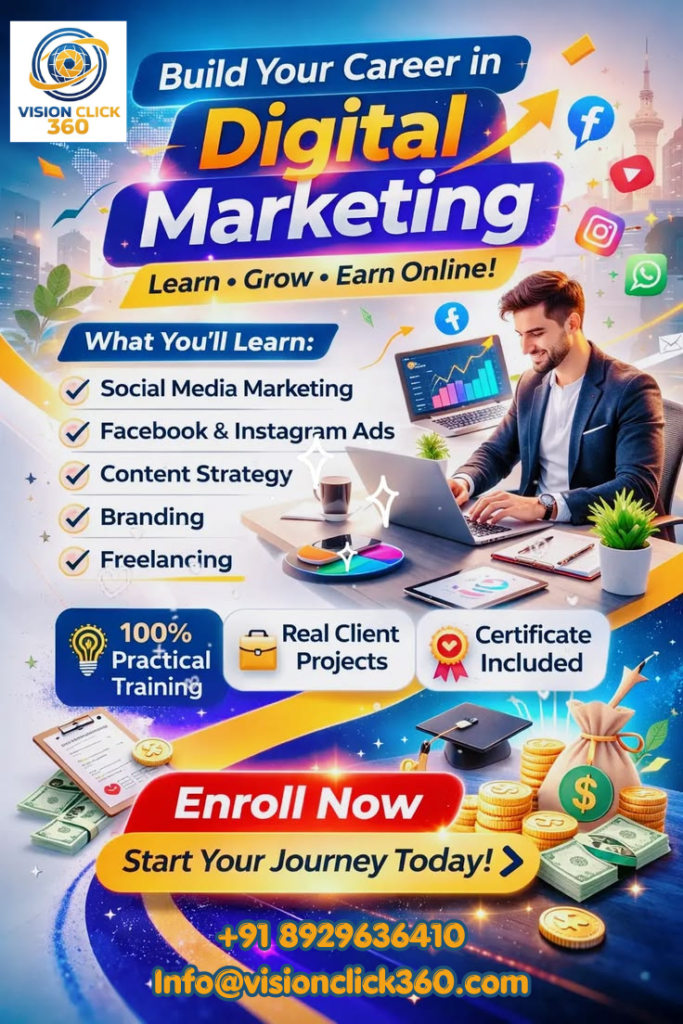
Depending on the course, the curriculum can include:
- Search Engine Optimization
- Local SEO
- Google Business Profile optimization
- Google Ads
- Meta Ads
- Social Media Marketing
- Content Marketing
- Email Marketing
- Website Development
- WordPress
- Analytics
- Lead Generation
- YouTube SEO
- AI marketing tools
- AEO and GEO
- Freelancing and client management
A good program should not focus only on definitions. Learners should understand how to plan, implement, measure and improve digital campaigns.
For example, instead of simply learning what SEO means, students should be able to perform keyword research, identify technical issues, optimize a page, build content clusters and evaluate performance.
Why Learn Digital Marketing in 2026?
Digital marketing continues to involve multiple channels rather than a single marketing platform. Search, paid advertising, websites, social media, video, email, analytics and AI-assisted workflows increasingly work together.
Google’s current Search documentation also covers AI features, structured data, featured snippets and other search appearances, showing that modern SEO requires understanding how content is presented across evolving search experiences.
For a student or professional, learning digital marketing can provide several practical career paths:
| Career Direction | Core Skills |
| SEO Executive | SEO, keyword research, content, technical SEO |
| Local SEO Executive | GBP, local citations, reviews, local content |
| PPC Executive | Google Ads, conversion tracking, campaign optimization |
| Social Media Executive | Content, Meta platforms, analytics |
| Content Marketer | Research, SEO writing, content strategy |
| Performance Marketer | Paid ads, analytics, CRO, lead generation |
| WordPress Developer | WordPress, UX, basic technical SEO |
| Digital Marketing Freelancer | Multiple channels + client management |
| Business Owner | Marketing strategy, leads, analytics |
The important point is that training should create practical capability, not just course completion.
What Should a Good Digital Marketing Course Include?
1. SEO and Local SEO
SEO should cover more than inserting keywords into articles.
Students should understand:
- Search intent
- Keyword research
- On-page SEO
- Technical SEO
- Internal linking
- Content optimization
- Off-page SEO
- Local SEO
- Google Business Profile
- Schema markup
- Search Console
- SEO reporting
Local SEO is particularly useful for businesses serving specific locations. A learner should understand how location, relevance, business information, reviews, content and website signals work together.
2. Google Ads and Paid Marketing
Google Ads training should involve campaign planning rather than simply showing students where to click.
Google’s official documentation explains that Search campaigns can connect businesses with people actively searching for their products or services. It also recommends structuring campaigns around goals, relevant keywords, ad messaging and landing pages.
Practical training should cover:
- Campaign objectives
- Keyword research
- Match types
- Negative keywords
- Ad copy
- Landing pages
- Conversion tracking
- Budget allocation
- Performance analysis
- Optimization
3. Social Media Marketing
Social media training should go beyond posting attractive images.
Learners should understand:
- Audience research
- Content pillars
- Content calendars
- Reels and short-form video
- Organic engagement
- Paid campaigns
- Lead generation
- Community management
- Performance reporting
A restaurant, interior designer and coaching business may require completely different content strategies. Practical examples help learners understand this difference.
4. Website Development
A marketer should understand how websites support marketing.
A practical course may introduce:
- WordPress
- Landing page creation
- Website structure
- Mobile usability
- Forms and CTAs
- Basic HTML/CSS concepts
- Website speed
- Conversion optimization
- Basic technical SEO
Website health also matters. WordPress’s Site Health tools check areas such as configuration, security and performance, making basic website maintenance an important part of practical digital knowledge.
5. AI, AEO and GEO
Modern marketers increasingly need to understand how users discover information through AI-powered search experiences.
Training can introduce:
- AI-assisted keyword research
- Content ideation
- Search intent analysis
- Entity optimization
- Question-based content
- AEO
- GEO
- AI-assisted content workflows
- Content quality evaluation
- Human editing and fact-checking
However, AI should not replace expertise or original thinking. Google’s Search documentation states that spam policies apply to attempts to manipulate generative AI responses as well as traditional Search.
The goal should therefore be useful, original and trustworthy content, not mass-produced pages.
Who Should Join a Digital Marketing Course?
A digital marketing program can be useful for different audiences.
Students and Freshers
Students can learn industry skills before entering the job market. Practical projects can also provide material for a portfolio.
Working Professionals
Professionals from sales, business development, design, IT or traditional marketing can add digital skills to their existing experience.
Business Owners
Business owners can learn how SEO, Google Ads, social media and websites contribute to customer acquisition.
Freelancers
Freelancers can develop service packages around SEO, social media, paid advertising, websites or content marketing.
Entrepreneurs and Startups
Founders can understand how to create an online acquisition system instead of depending entirely on referrals.
How to Choose a Digital Marketing Course Near Me
When comparing a Digital Marketing Course Near Me, don’t choose only because an institute appears close to your location.
Use this checklist:
Step 1: Review the Curriculum
Check whether the syllabus includes current skills such as SEO, Google Ads, Meta Ads, analytics, website development and AI-related search optimization.
Step 2: Check Practical Training
Ask whether students work on:
- Live websites
- Campaign exercises
- SEO audits
- Keyword research
- Landing pages
- Content projects
- Analytics reports
- Lead-generation exercises
Step 3: Understand Trainer Experience
Ask who will teach the course and whether the trainer has practical agency, freelance or business experience.
Step 4: Check Learning Format
Compare:
- Offline classes
- Online classes
- Weekend batches
- Weekday batches
- Small-group training
- Live projects
- Doubt sessions
Step 5: Ask About Career Support
Career support may include:
- Resume guidance
- Interview preparation
- Portfolio development
- Career counselling
- Freelancing guidance
Avoid choosing an institute purely because of unsupported placement or salary promises.
Step 6: Compare Course Value
Instead of comparing only fees, compare the overall value:
| Factor | Basic Training | Practical Training |
| Theory | Yes | Yes |
| Tools | Limited | Regular usage |
| Projects | Sometimes | Core component |
| Live Work | Limited | Included where applicable |
| Portfolio | Rarely covered | Usually emphasized |
| Interview Preparation | Limited | Included |
| Career Guidance | Variable | Structured |
Online vs Offline Digital Marketing Training
Both learning formats can work. The better option depends on your learning style.
| Factor | Offline | Online |
| Trainer interaction | Direct | Video/live interaction |
| Flexibility | Moderate | High |
| Networking | Easier locally | Depends on community |
| Hands-on support | Immediate | Depends on trainer |
| Commute | Required | Not required |
| Location benefit | Strong | Less important |
For learners specifically searching for Digital Marketing Course Near Me, offline classes can be useful if they prefer face-to-face guidance.
For someone working full-time or living farther away, online learning may be more convenient.
Digital Marketing Course in Noida Extension and Greater Noida West
Learners searching for a Digital Marketing Course in Noida Extension may also compare institutes in Greater Noida West and nearby locations.
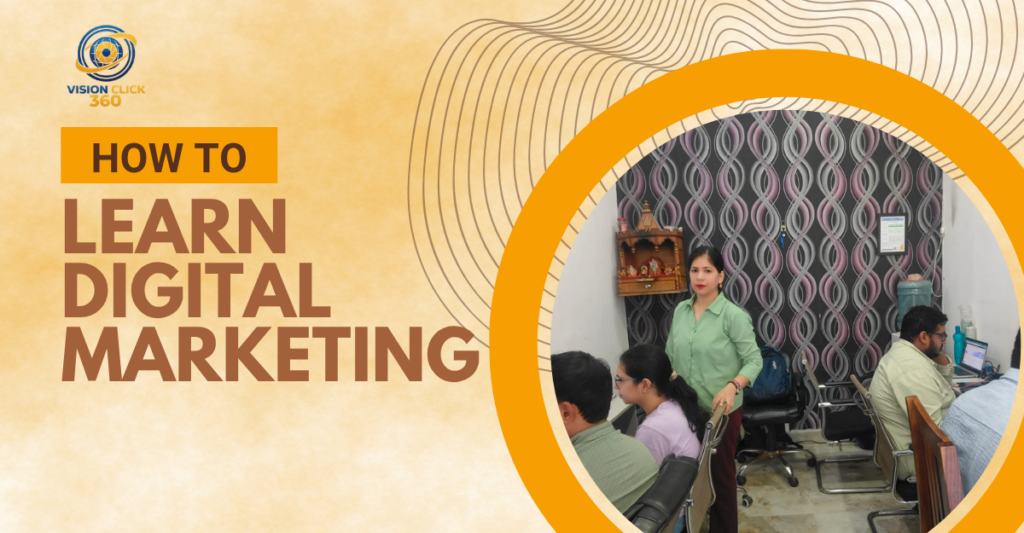
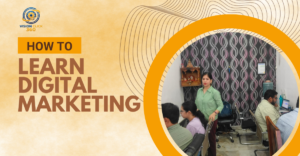
VisionClick 360 operates from the Greater Noida West/Noida Extension area and provides digital marketing training alongside digital marketing services.
The local audience may include learners from:
- Greater Noida West
- Noida Extension
- Gaur City
- Greater Noida
- Noida
- Ghaziabad
- Delhi NCR
For local learners, proximity can make it easier to attend regular classes and interact with trainers.
At the same time, location should not be the only selection criterion. Compare curriculum, practical work, trainer expertise, tools, projects and career guidance before enrolling.
Career Roadmap After Digital Marketing Training
A simple career roadmap can look like this:
Stage 1: Foundation
Learn marketing fundamentals, customer journeys, search behaviour and digital channels.
Stage 2: Core Skills
Build skills in SEO, social media, Google Ads, Meta Ads, content and websites.
Stage 3: Analytics
Learn how to measure traffic, leads, conversions and campaign performance.
Google Analytics allows marketers to measure interactions and define important actions as key events, making measurement an important part of practical marketing.
Stage 4: Portfolio
Create practical projects such as:
- SEO audit
- Keyword research document
- Local SEO strategy
- Google Ads campaign structure
- Social media calendar
- Landing page
- Content strategy
Stage 5: Interview Preparation
Practice explaining what you did, why you did it and how you measured the outcome.
Stage 6: Career Selection
Choose a direction:
SEO → PPC → Social Media → Performance Marketing → Content → Freelancing → Agency → Entrepreneurship.
Interview Questions and Resume Tips
Common Interview Questions
Candidates may be asked:
- What is SEO?
- What is search intent?
- What is the difference between SEO and PPC?
- What is a Google Business Profile?
- What are negative keywords?
- How do you measure campaign performance?
- What is conversion tracking?
- What is on-page SEO?
- How would you improve a website’s organic visibility?
- How would you generate leads for a local business?
Don’t memorize definitions alone. Prepare examples.
Resume Tips
A digital marketing resume should highlight skills and evidence, not just course names.
Include:
- SEO skills
- Paid advertising skills
- Tools used
- Website projects
- Certifications
- Portfolio links
- Internship/project experience
- Measurable project outcomes where genuinely available
Instead of writing “Knowledge of SEO,” a stronger project description could explain that you conducted keyword research, optimized pages, created an internal linking plan and prepared an SEO performance report.
Tools You Should Learn
A practical curriculum can introduce tools such as:
- Google Search Console
- Google Analytics 4
- Google Ads
- Google Keyword Planner
- Google Business Profile
- WordPress
- Canva
- Google Tag Manager
- Semrush
- Ahrefs
- Screaming Frog
- Looker Studio
- Meta Ads Manager
- AI productivity tools
The exact tools matter less than knowing when and why to use them.
For example, Google Analytics can help measure website interactions, while Search Console supports understanding search performance. Google Ads provides campaign and conversion-focused advertising capabilities.
Common Mistakes When Choosing Training
Choosing Only on Price
The cheapest course may not provide the practical depth you need.
Selecting Based Only on “Best” Claims
Terms such as “best” or “number one” are not substitutes for evidence.
Learning Only Theory
Digital marketing is execution-oriented. Practice matters.
Ignoring Analytics
If you cannot measure performance, it becomes difficult to understand whether a strategy is working.
Depending Completely on AI
AI can accelerate research and content workflows, but marketers still need strategy, fact-checking, originality and human judgment.
Expecting Instant Results
SEO, content marketing and organic growth can require consistent work. Paid advertising may generate traffic quickly, but profitable results still depend on targeting, offer, landing-page quality and conversion tracking.
Practical Learning Checklist
Before completing your training, try to confirm that you can:
- Perform keyword research
- Identify search intent
- Optimize a webpage
- Conduct a basic SEO audit
- Create a local SEO strategy
- Optimize a Google Business Profile
- Structure a Google Ads campaign
- Understand Meta advertising
- Create a content calendar
- Build a basic WordPress website
- Set up basic analytics measurement
- Understand conversion tracking
- Create SEO content
- Explain AEO and GEO
- Build a professional resume
- Prepare a digital marketing portfolio
- Explain your projects in an interview
Future Trends in Digital Marketing
Digital marketing is moving toward a more integrated environment involving traditional search, AI-powered search, automation, first-party measurement, video and multi-channel customer journeys.
Google’s recent Search documentation updates include guidance around generative AI features and specifically note that conventional SEO best practices continue to be relevant for visibility in generative search experiences.
Another important development is the growing importance of structured, understandable information. Google provides structured-data documentation for formats such as Article, Breadcrumb, Organization and other content types.
For marketers, the practical takeaway is simple:
Learn fundamentals first, then learn how emerging technology changes the way those fundamentals are applied.
FAQ
1. How do I choose the best Digital Marketing Course Near Me?
Start by comparing curriculum, practical projects, trainer experience, tools, learning format and career support. A useful course should cover SEO, paid advertising, social media, analytics, websites and current digital marketing practices. If you are located around Greater Noida West, Noida Extension, Noida or Ghaziabad, also consider travel convenience. However, don’t select a course only because it is nearby. The quality of practical training and your ability to build a portfolio are more important long-term factors.
2. What should I learn in a digital marketing course?
A comprehensive program should cover SEO, Local SEO, Google Ads, Meta Ads, social media marketing, content marketing, website development, analytics, lead generation and conversion optimization. Modern training can also introduce AI-assisted workflows, AEO and GEO. The ideal syllabus depends on your goal. Someone preparing for an SEO job may need deeper SEO and analytics training, while a business owner may need broader knowledge across lead generation and paid advertising.
3. Is digital marketing suitable for beginners?
Yes. Beginners can start with fundamental marketing concepts and gradually learn individual channels. You do not need to master every platform immediately. A practical learning path is to start with SEO, content, social media and basic analytics before progressing into paid advertising, technical SEO and performance marketing. Completing small projects along the way can make the learning process easier and give you portfolio material for future interviews or freelance work.
4. How long does it take to learn digital marketing?
The timeframe depends on your previous knowledge, learning schedule and desired specialization. Basic concepts can be learned relatively quickly, but becoming confident with SEO, advertising, analytics and campaign optimization requires consistent practice. Instead of focusing only on completing lessons, set practical milestones such as completing an SEO audit, creating a campaign structure, building a WordPress page and preparing a marketing report. Continuous learning is important because platforms and digital marketing practices change.
5. Is offline digital marketing training better than online training?
Neither format is automatically better. Offline training can provide direct trainer interaction, classroom discussions and local networking. Online training can provide flexibility for working professionals or learners who live farther away. If you are specifically searching for Digital Marketing Classes Near Me, compare the actual teaching method, project work, trainer support and schedule rather than choosing based solely on format.
6. Can digital marketing help with freelancing?
Yes. Digital marketing includes several services that can be offered independently, including SEO, local SEO, social media management, content marketing, website development and paid advertising. Beginners should avoid trying to sell everything at once. A better approach is to develop one or two strong services, create sample projects, build a portfolio and gradually learn client communication, proposals, reporting and pricing.
7. What career options are available after digital marketing training?
Possible career paths include SEO Executive, Local SEO Executive, PPC Executive, Social Media Executive, Content Marketer, Performance Marketing Executive, Digital Marketing Executive, WordPress specialist and freelancer. With experience, professionals can move toward specialist, strategist, account-management or agency roles. Business owners can also use the knowledge to manage marketing activities more effectively and evaluate external agencies or freelancers.
8. What should I ask an institute before enrolling?
Ask about the syllabus, trainer experience, practical projects, tools, batch size, class format, project feedback, certification, career guidance and course duration. Ask whether you will actually perform tasks such as keyword research, SEO audits, website optimization, campaign planning and analytics reporting. Also clarify what “placement support” or “career support” means instead of assuming that it represents a guaranteed job.
Conclusion
Choosing a Digital Marketing Course Near Me should be about more than finding the closest training center.
The right program should help you understand how digital marketing works and give you opportunities to practice SEO, paid advertising, social media, websites, analytics, content and lead generation.
For learners in Greater Noida West, Noida Extension, Greater Noida, Noida, Ghaziabad and Delhi NCR, a local institute can be convenient for regular classroom learning. But curriculum quality, practical exposure, trainer expertise and career guidance should remain the primary decision factors.
The strongest digital marketers continue learning after their course ends. Build projects, analyze results, follow platform changes and develop a portfolio that demonstrates what you can actually do.
CTA
Ready to Start Learning Digital Marketing?
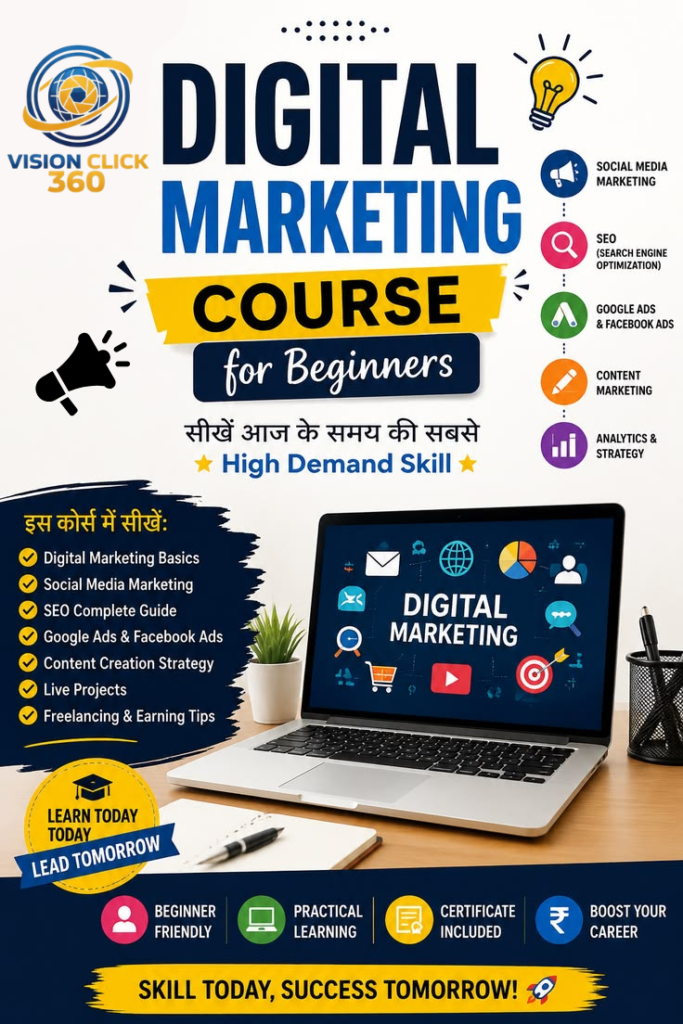
VisionClick 360 provides practical digital marketing training for students, freshers, working professionals, freelancers, entrepreneurs and business owners.
The training approach can cover SEO, Local SEO, Google Ads, Meta Ads, Social Media Marketing, WordPress Website Development, Content Marketing, Lead Generation, AI tools, AEO, GEO and other practical digital marketing skills.
VisionClick 360 also provides professional SEO Services, Google Ads, Meta Ads, Website Development and Social Media Marketing for businesses looking to improve their online visibility and generate relevant opportunities.
If you are searching for a Digital Marketing Course Near Me, Digital Marketing Training Near Me, or a Digital Marketing Course in Noida Extension, explore VisionClick 360 and discuss your learning or business goals before choosing a program.
Visit: https://visionclick360.com/
Call/WhatsApp: +91-8929636410
VisionClick 360 — Your Growth, Our Vision.